Sundog CSA June 1st, 2026
The official start of this vegetable season for 2026 is here and we are only 20 days from the first day of summer. It has been a strange spring with the temperatures bouncing up and down the thermometer during a fairly dry April and a very soggy May. Late April frost meant that most of our fruit trees are on an involuntary sabbatical this year with nothing to do except grow leaves since they bloomed early, fooled by those very early days in the beginning of spring. Our gardens are late this year, both due to weather and myself not sticking seeds in the soil in February and early March. We have put in some “dirt hours” and hope to make up time if it ever dries up so that we are able to walk on the ground instead of “in the ground”.
Hill Inhabitants: Our cows are glad to be out on grass with half of them in the summer pasture and the other half hanging out here. The milk cows usually stay home for the summer and become the queens of the herd only to lose that title to the pasture cows in the fall. It was a muddy winter and we all became a little territorial over our mud boots. The summer pigs are loving this weather and have lost the white hides they came in, turning a soft cocoa brown and becoming invisible as they scramble from one side of the hill to the other. Our honeybees are still here and most amazing of all is that Katy caught her first swarm a couple of weeks ago. And so far, they seem to be interested in renting the boxes she offered. Our bee mentor, Shawn, would be proud to hear that news. Katy spent a lot of time sprinting last spring and summer as she and the bees worked out a communal living arrangement agreement. I am not sure that Katy ever agreed to much of anything. Currently, we have six hives and Katy has set that as our limit. We have work to do before we can move in any new chickens so our flock remains about the same although the neighbor’s guineas seem to be here on a daily basis, trying to blend in as though they are chickens. I guess they are doing a pretty good job of that as one of our milk customers told Katy she loved seeing our guineas! 😊
YOUR BAG THIS WEEK
- Rhubarb
- Turnips
- Onions
- Mixed Greens
- Lettuce
- Spinach
- Lemon Balm
I have become more than fascinated with rhubarb and I am not sure why? Maybe it is because my grandma used to make “grass pies” for supper and I associate it with her or maybe it is because I like the idea that a perennial commonly known as “pie plant” can be used in so many different ways and it actually tastes good. I did not think so as a kid and would not touch those pies! I think I missed out! My sister gives me magazines and in a very old one, I found some recipes and history for rhubarb - hope you try one of them!
History wise, our rhubarb is a culinary variety while a medicinal cousin grows native in China and is used as a remedy for everything from toothache to appendicitis to burns. All rhubarbs are members of the buckwheat family and the culinary stalks come in a range of colors from deepest red to bright green. The stalks are the only part of the plant that is used in recipes as the leaves are toxic. Rhubarb is a tart fruit and, in many countries, including the United States, it has been used to make fermented drinks.
The recipe that I am sharing is from GRIT magazine and was by Susan Belsinger. It is rather long but it sounds so good and although I have not yet tried, I intend to see if it looks like a “grandma pie”. We included lemon balm in the bag this week in case pie is on your menu this week also!
Lemon Balm Custard with RHUBARB SAUCE
Custard:
2 ½ cups milk
½ cup fresh lemon balm or 2 fresh bay leaves
1 teaspoon lemon zest
½ vanilla bean, split lengthwise or 1 teaspoon pure vanilla extract
½ cup sugar
2 extra-large whole eggs
2 extra large egg yolks
Pinch salt
In heavy bottomed, nonreactive pan, heat milk with lemon balm, lemon zest and vanilla bean, if you are using it, and bring it to simmer. Remove from heat, cover and let stand for about 30 minutes. Meanwhile, prepare pan large enough to hold 6 to 8 ramekins or custard cups.
Heat oven to 325 degrees. Add sugar to milk-herb mixture and gently reheat to dissolve sugar, stirring occasionally. In small bowl, lightly beat eggs with egg yolks and pinch of salt. Pour or spoon about ½ cup warm milk into eggs and whisk to incorporate. Then add all of milk mixture to eggs and blend well. Add vanilla extract, if not using bean.
Pour custard mixture through a strainer to remove herbs, zest and vanilla bean, pressing them gently to remove their essence. Pour custard mix evenly into custard dishes.
Carefully fill pan holding custard dishes with hot water. Place pan in oven and bake custards until they are set, about 40 minutes or until knife inserted in center comes out clean.
Remove custards from hot water and place on baking rack to cool. Serve warm, or cool and refrigerate. The custard may be served in dish it was baked in or unmolded by gently running spatula around edges of dish and inverting on serving plate.
If you have lemon balm or sweet woodruff, add a handful of leaves to rhubarb sauce along with rest of ingredients, and remove them before serving.
This sauce makes a little more than needed, but will keep in the refrigerator for a week. Besides ice cream, it is delicious on waffles, pancakes, biscuits and peach pie and stirred into yogurt or oatmeal.
SAUCE:
Rhubarb
½ cup orange juice, preferrable fresh squeezed
½ cup sugar
1-to-2-inch piece vanilla bean, split lengthwise (For each vanilla bean, you can substitute 1 tablespoon pure vanilla extract)
Few dashes fresh grated nutmeg
Scrub rhubarb, trim ends and cut lengthwise down the center. Cut into ½ inch slices. Measure out 4 cups.
Combine rhubarb, orange juice, sugar, vanilla bean, nutmeg and herbs, if you are using them, in large, heavy bottomed nonreactive saucepan and place over medium-high heat. Stir, cover and bring to a simmer, which will take just a few minutes. Remove lid, stir well and reduce heat to medium. Cover and cook 5 minutes. Remove lid and stir.
Cover and let stand, sauce will continue to cook a little as it stands. The sauce should be about the consistency of thick soup. If you want it thicker, cook a few minutes more with the lid off. Remove herbs and vanilla bean pieces before serving. Serve warm or at room temperature; it can easily be reheated.
The tartness of the rhubarb sauce is a wonderful counterpoint to the smooth custard.
Try the turnips in your bag raw in slices, added to salads or just a snack to munch on. Izzy and I ate slices this evening as we were washing them and love that they are so sweet and mild. The greens are fairly tender and according to “From Asparagus to Zucchini: A guide to Farm-Fresh Seasonal Produce”, turnip greens top the nutritional charts as an excellent source of vitamins A, C, and B complex, and minerals potassium, magnesium and calcium.
Asian Style Sauté –“From Asparagus to Zucchini: A guide to Farm-Fresh Seasonal Produce” Harmony Valley Farm
2 tablespoons sesame oil 1 tablespoon vinegar
3-4 cloves garlic, chopped 2 tablespoons tamari
½ pound mixed greens, coarsely chopped freshly ground pepper
Heat oil in wok or large skillet to moderate heat. Add garlic and sauté 2 minutes. Remove garlic and set aside. Now sauté greens until just wilted. Remove from heat, and stir in vinegar, tamari, pepper and garlic. Serve immediately. Great as a side dish or with rice. Makes 2-4 servings.
From One United Harvest, Creative Recipes from America’s Community Supported Farms
Turnip Greens – Shared by Sunshine Farm, Lagrange, Kentucky
½ pound fresh turnip greens 1 small yellow onion, minced
4 cups water salt and ground black pepper to taste
2 slices bacon, chopped
In a 3-quart saucepan, bring the water to a boil. Add the greens and boil for 5 minutes. Drain, squeeze out excess water, and set aside. Put the bacon and onion in a large skillet. Stirring constantly, over medium-low heat until the onion turns translucent and the bacon is slightly crisp, about six minutes. Add the greens. Still stirring, cook for about 5 minutes more or until tender and wilted. Salt and pepper to taste. Serves 4.
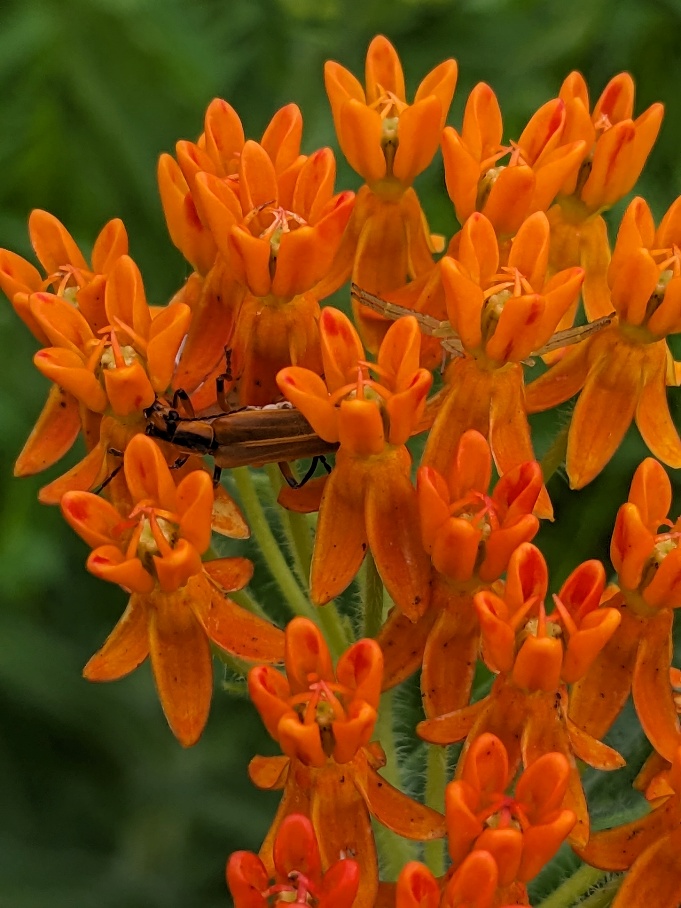
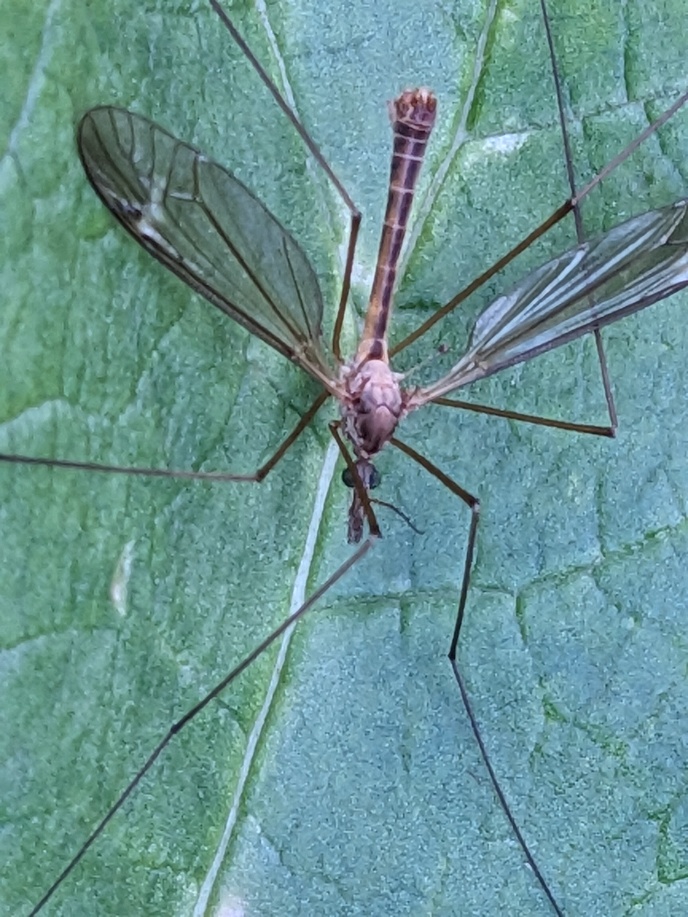
Above is a “butterfly plant” or as we called them, “chigger weeds” because they seemed to attract those little pests and perched on a giant rhubarb leaf is a common crane fly although I find nothing common about this beautiful creature.
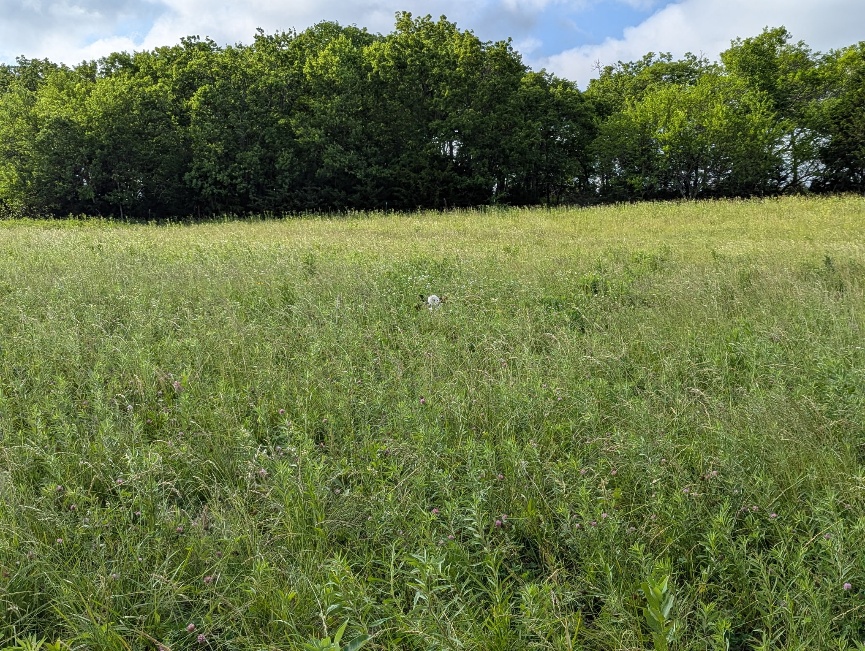
Bottle feeding “Pumpkin” is three times a day task. And Izzy took a picture and said it should be titled “ where is Crystal instead of where is Waldo?”. Can you find our little black and white calf?
With all the moisture and the mud, the flies have multiplied rapidly the past few days making milking more of an exercise than I would like it to be. I have this habit of milking in sort of a rhythm - almost making music as the sounds change with the filling of the bucket. Those peaceful sounds end when you feel a sharp stab and realize that your sweat covered shirt, sticking to your back has become a landing port for a fly, hunting for a late supper. Back biting flies cause immediate reactions as one hand flies backwards in a motion one would not believe possible as you swat wildly at the piercing insect, busting yourself in the back as you miss the fly of course, holding onto the bucket with the other hand and realizing that there is no music in the barn tonight. Only the laughter of the audience watching your gymnastics!
Blessings of the farm – Seth, Dan, Izzy, Katy, Jen, Zach and Teresa